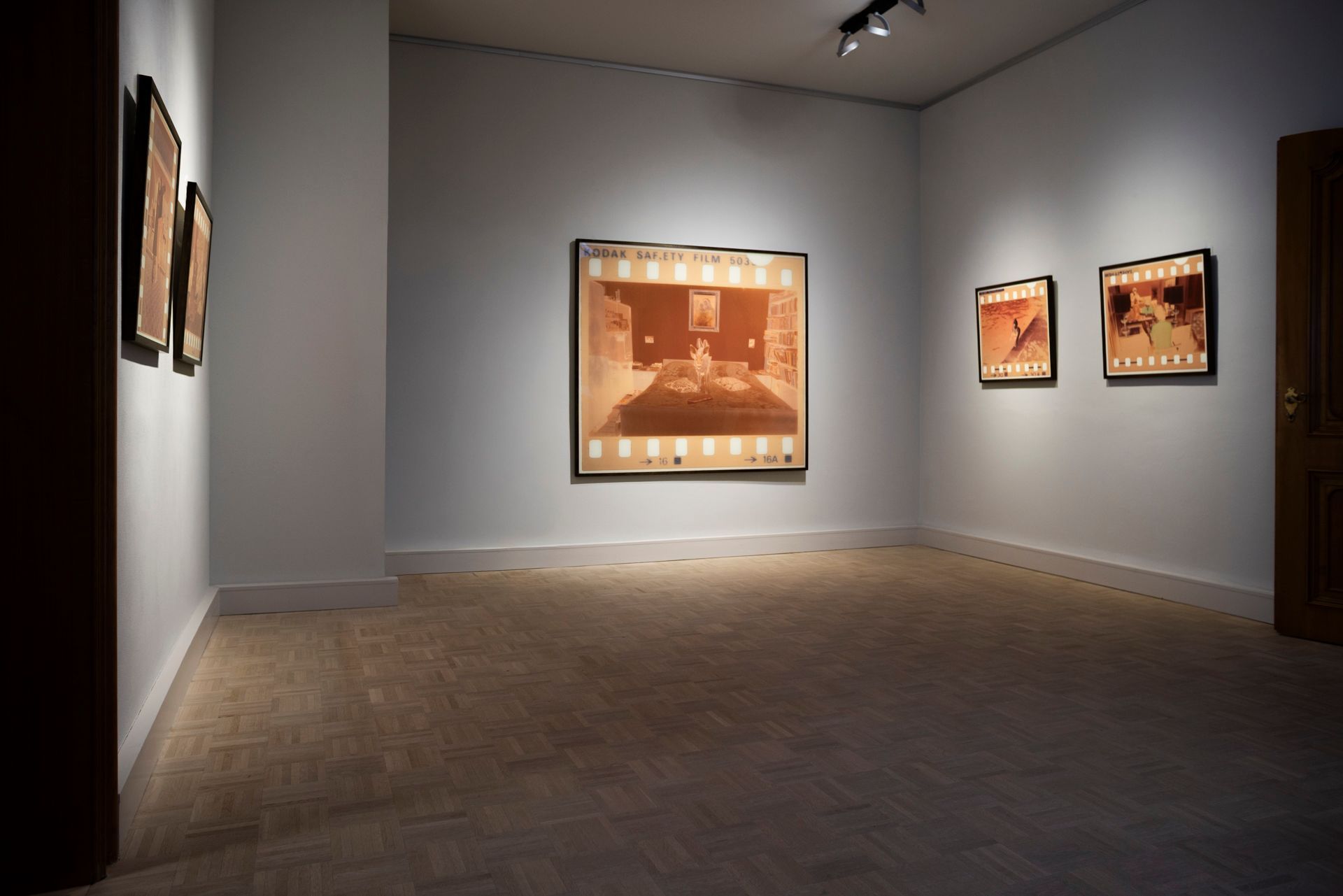
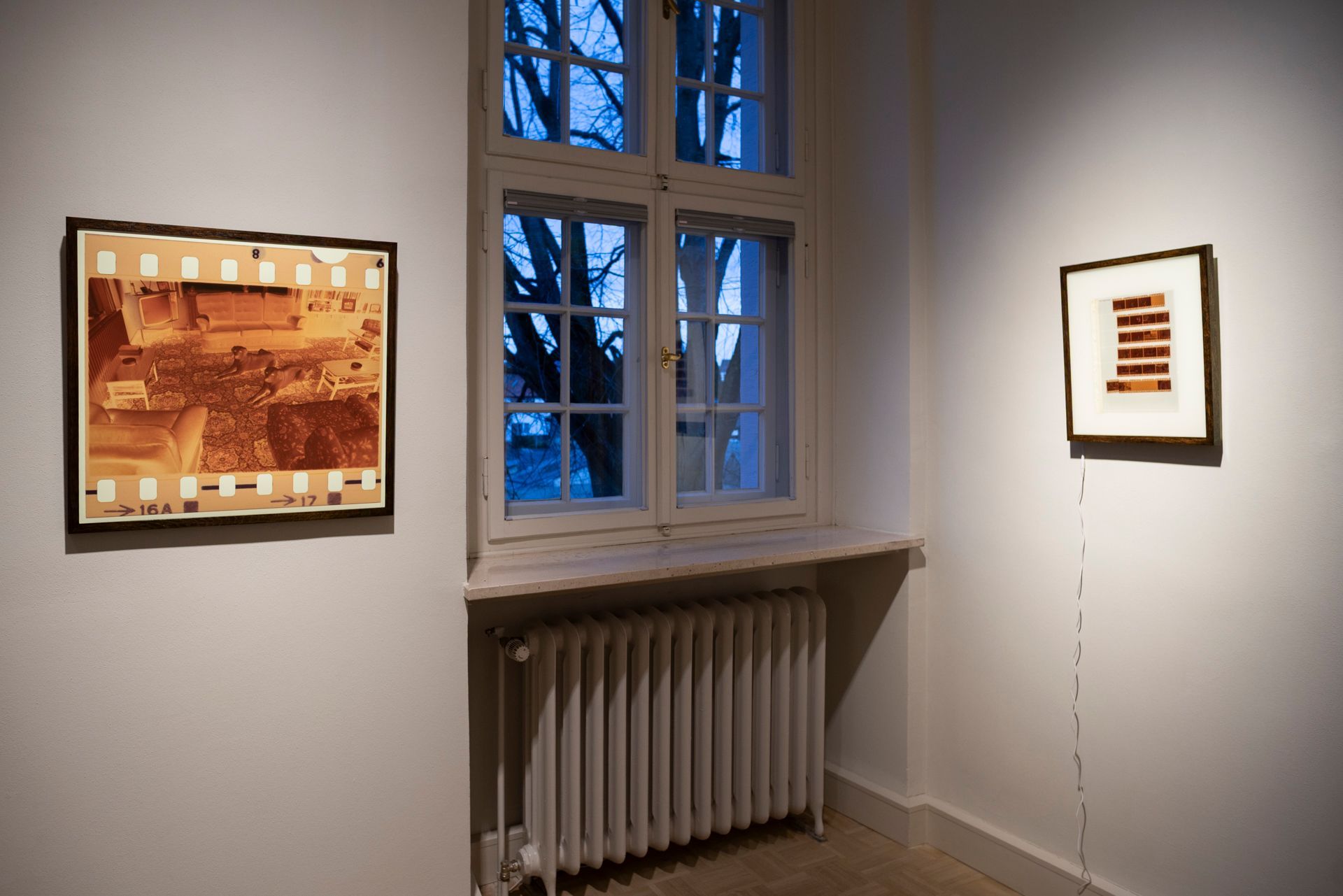
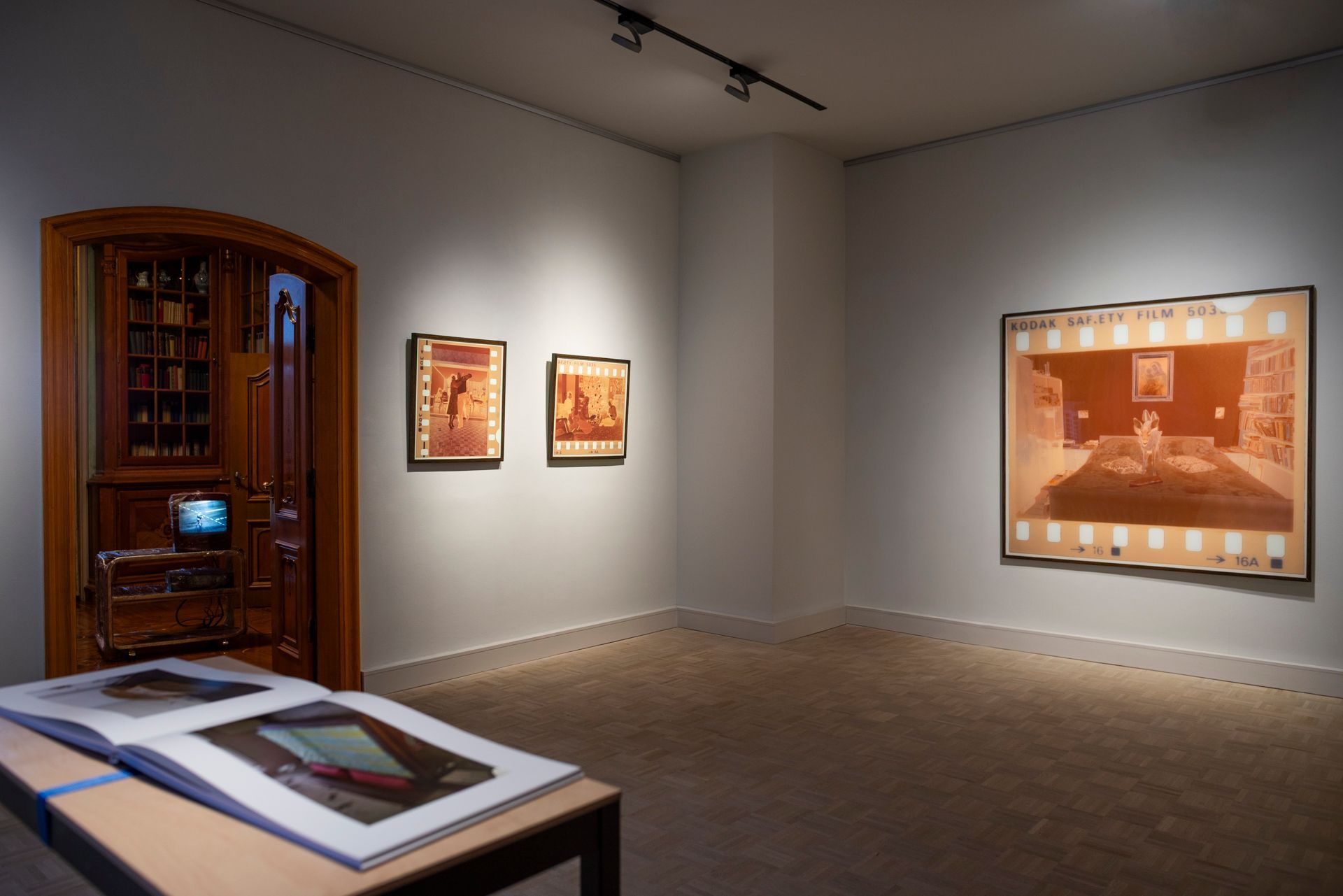
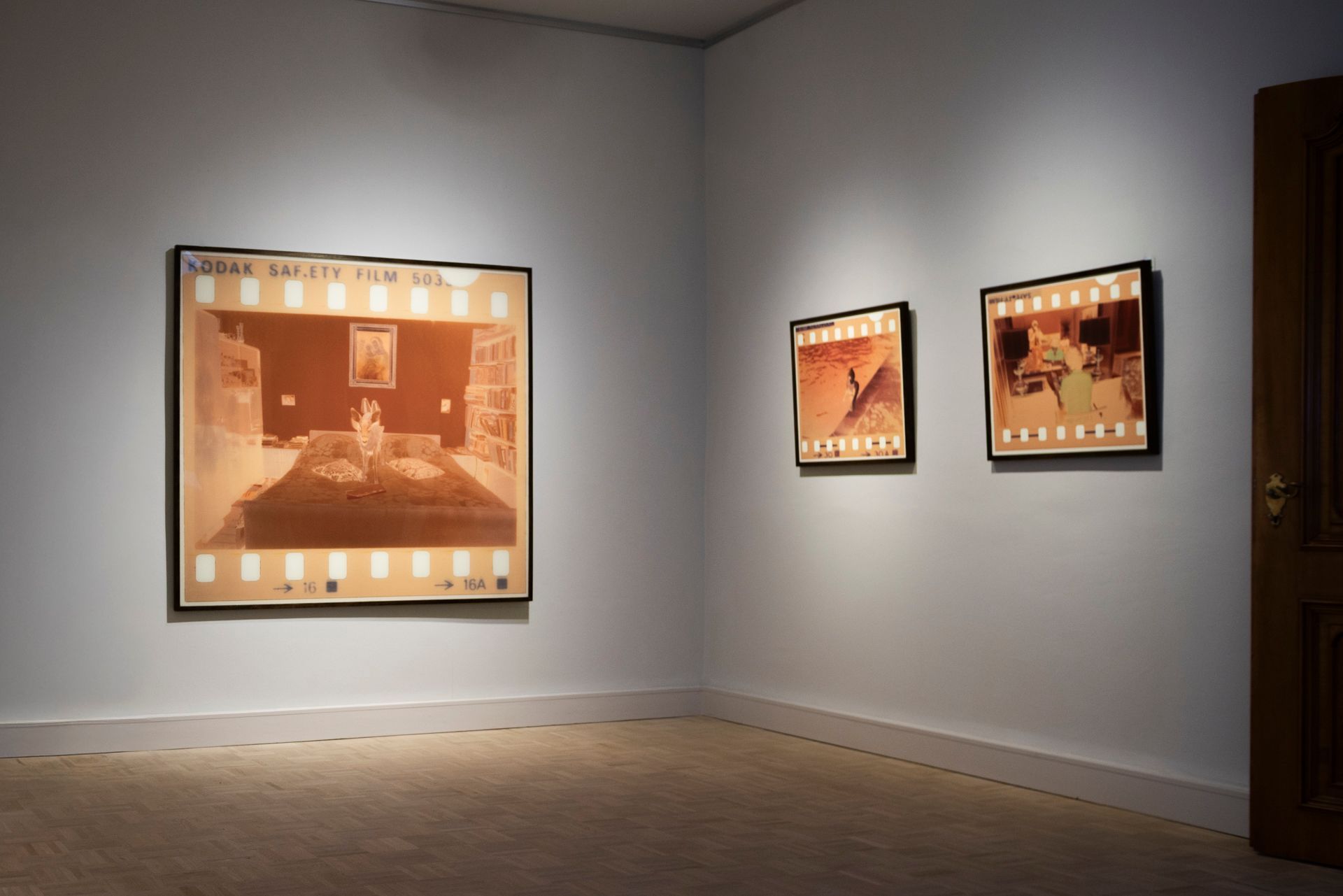
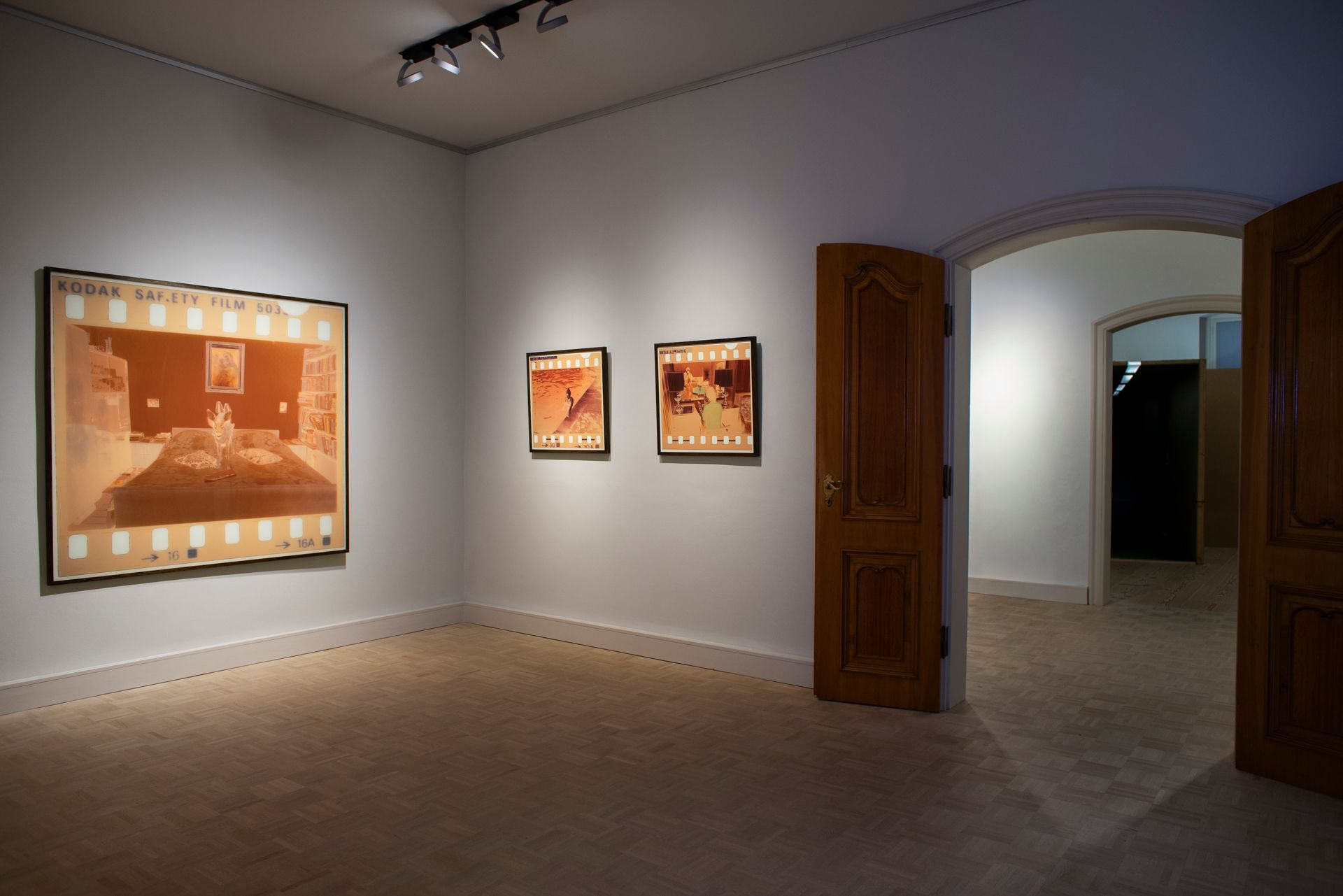
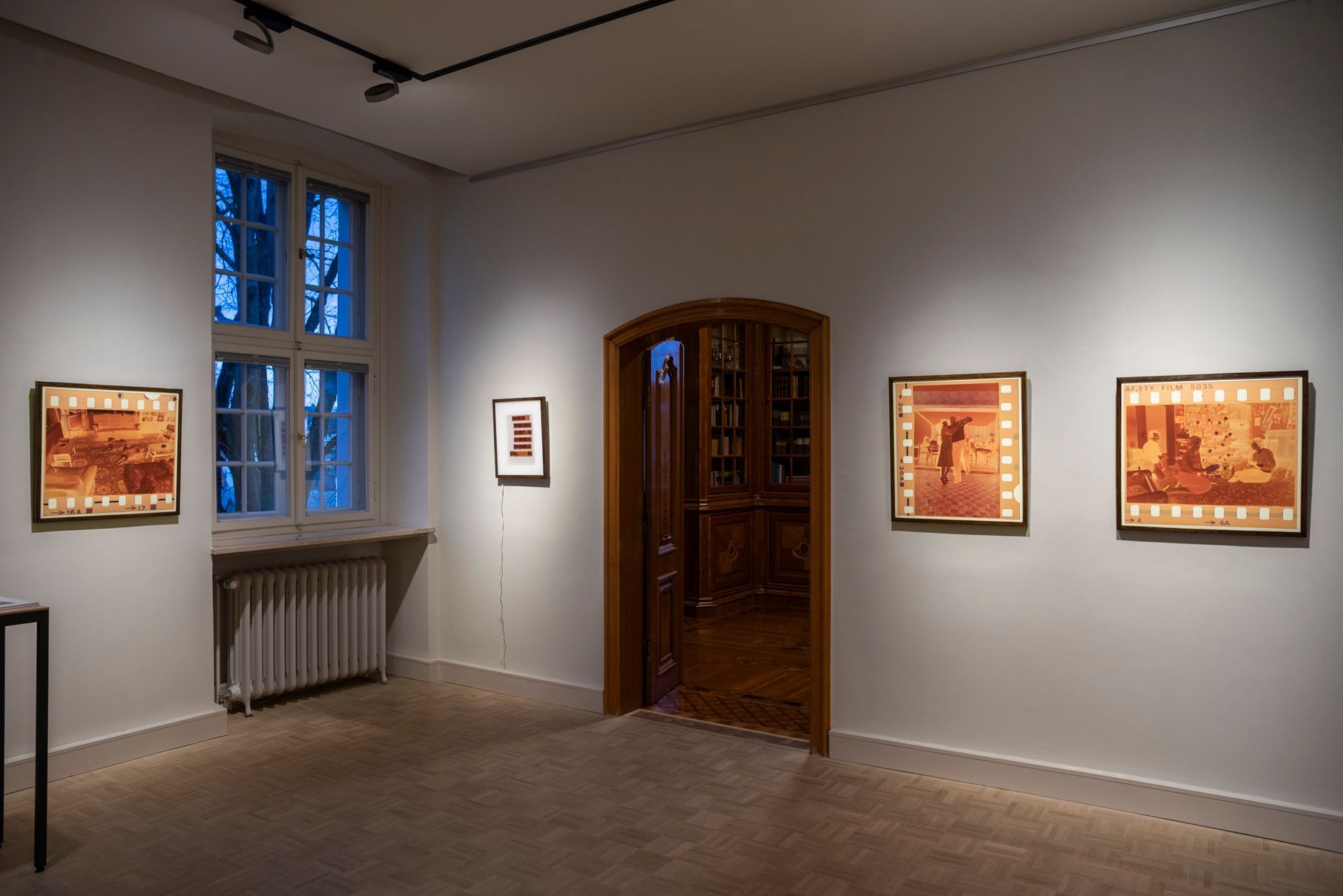
Kleinbildnegativ
2019
Ausstellungsansicht "Kollisionsfamilie"
Lippische Gesellschaft für Kunst,
Eichenmüllerhaus
Die Anderen I-V
Pigmentdrucke / fine art prints
60 x 65 cm
Capreolus Capreolus
UV Digitaldruck / UV digital print
155 x 165 cm
Der Wellensittich
Leuchtrahmen / illuminated frame
40 x 50 cm
Verdacht auf Skepsis
Ich hielt eine Transparenthülle mit alten Negativen gegen das Licht. Ich hatte sie beim Trödler an der Ecke gekauft. 50 Hüllen á 26 Aufnahmen, manche sogar 28. Der Fotograf war ein Profi, oder ein Knauser. Er war technikaffin, Mittelständler, Spiegelreflex, Skiurlaub und Modelleisenbahn. Gnadenlos dem Fortschritt verpflichtet.
Das Kleinbildnegativ ist wahrscheinlich der meist verbreitete Datenträger des 20. Jahrhunderts. Die Austauschbarkeit von Figuren und Kulissen, der jeweils repräsentierten Milieus, ist gleichzeitig universell und spezifisch. Die prompte kollektive Identifikation mit dem Bekannten und die Sehnsucht, Personen und Gegenstände festzuhalten, erzeugte bei mir immer eher Skepsis denn Heimatgefühl.
Mein Auftrag war klar. Ich musste möglichst schnell viele hundert Negative digitalisieren, um mehr über meinen Klienten, und die Zeit in der er gelebt hatte, herauszufinden. Die erste Wahl fiel auf einen Durchlichtscanner. Der Prozess mühsam und das Ergebnis: positiv. Das reichte nicht. Aus einer Schublade zog ich ein altes 50 mm Macro, es mochte ungefähr so alt sein wie die Negative. Abbildungsmassstab 1:1
Negative Gedanken
Dabei gewesen. Durch das Abfotografieren mit formatfüllendem Sucherbild habe ich schnell ein viel intimeres Verhältnis zu den Motiven entwickelt, als es mit einem Scanner möglich wäre. Ich habe ähnliche Sensationen und Konflikte erlebt, wie schon der ursprüngliche Fotograf, kann seine Entscheidungen und Zweifel besser nachvollziehen.
Jetzt noch ein Stück nach links. Die Adaption der Umkehrfarben als eine andere Realität war bereits nach wenigen Aufnahmen geschehen. Häufig habe ich mich bei dem Versuch beobachtet, die Tiefenschärfe oder den Bildausschnitt noch verändern zu wollen.
Zwischenschritt. Das eigenwillige Leuchten der Schatten verleiht den Motiven eine geisterhafte Innerlichkeit. Das Wissen über die eigentliche physikalische Größe von 24 x 36 mm und die Tatsache, das das Negativ nicht als Werk gedacht war, sondern als Mittel zum Zweck dessen, verstärkt diese hermetische Intimität.
Suspect of skepticism
I held a transparency sleeve with old negatives against the light. I had bought them at the thrift store on the corner. Fifty sleeves with 26 exposures each, some even 28. The photographer was either a professional or a nitpicker. He was tech-savvy, middle-class, SLR camera, ski vacation, and model railroad. Mercilessly committed to progress.
The 35mm negative is probably the most widespread data carrier of the 20th century. The interchangeability of figures and backdrops, of the milieus they represent, is both universal and specific. The prompt collective identification with the familiar and the longing to capture people and objects has always made me feel more skeptical than nostalgic.
My task was clear. I had to digitize hundreds of negatives as quickly as possible in order to find out more about my client and the time he had lived. My first choice was a transparency scanner. The process was painstaking and the result: positive. That wasn't enough. I pulled out an old 50 mm macro lens from a drawer, about as old as the negatives. Reproduction ratio 1:1
Negative thoughts
Been there. By photographing with a format-filling viewfinder image, I quickly developed a much more intimate relationship with the subjects than would have been possible with a scanner. I experienced similar sensations and conflicts as the original photographer, and was able to better understand his decisions and doubts.
Now a little to the left. The adaptation of the inverted colors as a different reality had already taken place after just a few shots. I often found myself trying to change the depth of field or the image section.
Intermediate steps. The idiosyncratic glow of the shadows lends the motifs a ghostly introspection. The knowledge of the actual physical size of 24 x 36 mm and the fact that the negative was not intended as a work of art, but as a means to an end, reinforces this hermetic intimacy.